%20%20--%3E%0A%3Csvg%20version%3D%221.1%22%20xmlns%3D%22http%3A%2F%2Fwww.w3.org%2F2000%2Fsvg%22%20xmlns%3Axlink%3D%22http%3A%2F%2Fwww.w3.org%2F1999%2Fxlink%22%20x%3D%220px%22%20y%3D%220px%22%0A%09%20viewBox%3D%220%200%20511.7%20200%22%20style%3D%22enable-background%3Anew%200%200%20511.7%20200%3B%22%20xml%3Aspace%3D%22preserve%22%3E%0A%3Cstyle%20type%3D%22text%2Fcss%22%3E%0A%09.st0%7Bfill%3A%23222222%3B%7D%0A%09.st1%7Bfill%3A%23F15C27%3B%7D%0A%09.st2%7Bfill%3A%23FFFFFF%3B%7D%0A%09.st3%7Bfill%3A%234D4D4D%3B%7D%0A%09.st4%7Bfill%3A%23777777%3B%7D%0A%3C%2Fstyle%3E%0A%3Cg%20id%3D%22Template%22%3E%0A%3C%2Fg%3E%0A%3Cg%20id%3D%22Layer_2%22%3E%0A%09%3Cg%3E%0A%09%09%3Cpath%20class%3D%22st1%22%20d%3D%22M21.7%2C0h28.9l21.7%2C90.5h-18l-5.1-21.9H23.1L18%2C90.5H0L21.7%2C0z%20M26.3%2C55.3h19.8l-9.9-41.3L26.3%2C55.3z%22%2F%3E%0A%09%09%3Cpath%20class%3D%22st1%22%20d%3D%22M78%2C90.5V0h42l17.8%2C13.6v30.1L123%2C55.7l15.4%2C34.7H119l-14.6-33.1h-6.8v33.1H78z%20M118.4%2C42V15.4H97.5V42H118.4%0A%09%09%09z%22%2F%3E%0A%09%09%3Cpath%20class%3D%22st1%22%20d%3D%22M190.2%2C90.5h-28.4l-17.7-12.8V12.8L161.8%2C0h28.4l17.7%2C12.8v64.8L190.2%2C90.5z%20M188.4%2C75.1V15.4h-24.8v59.7%0A%09%09%09H188.4z%22%2F%3E%0A%09%09%3Cpath%20class%3D%22st1%22%20d%3D%22M231.2%2C90.5l-17.7-12.8V0H233v75.1h23.9V0h19.5v77.6l-17.7%2C12.8H231.2z%22%2F%3E%0A%09%09%3Cpath%20class%3D%22st1%22%20d%3D%22M282%2C90.5V0h19.5l27.2%2C52.7V0h19.5v90.5h-19.5l-27.2-52.7v52.7H282z%22%2F%3E%0A%09%09%3Cpath%20class%3D%22st1%22%20d%3D%22M398.2%2C90.5h-44.4V0h44.4l17.7%2C13.6v63.1L398.2%2C90.5z%20M396.4%2C75.1V15.4h-23.1v59.7H396.4z%22%2F%3E%0A%09%3C%2Fg%3E%0A%09%3Cg%3E%0A%09%09%3Cpolygon%20class%3D%22st2%22%20points%3D%22490.2%2C100.2%20490.2%2C158.3%20460.2%2C100.2%20438.7%2C100.2%20438.7%2C200%20460.2%2C200%20460.2%2C141.9%20490.2%2C200%20%0A%09%09%09511.7%2C200%20511.7%2C100.2%20%09%09%22%2F%3E%0A%09%09%3Cpolygon%20class%3D%22st2%22%20points%3D%2257.5%2C117.2%2053.1%2C100.2%200%2C100.2%200%2C200%2021.5%2C200%2021.5%2C158.2%2042.5%2C158.2%2042.5%2C142%2021.5%2C142%2021.5%2C117.2%20%0A%09%09%09%09%09%22%2F%3E%0A%09%09%3Cpath%20class%3D%22st2%22%20d%3D%22M83.2%2C100.2l-19.5%2C14.2v71.5L83.2%2C200h31.3l19.5-14.2v-71.5l-19.5-14.2H83.2z%20M112.5%2C183H85.2v-65.8h27.3V183%0A%09%09%09z%22%2F%3E%0A%09%09%3Cpolygon%20class%3D%22st2%22%20points%3D%22184.8%2C183%20161.8%2C183%20161.8%2C117.2%20200.8%2C117.2%20196.4%2C100.2%20159.8%2C100.2%20140.3%2C115.2%20140.3%2C184.8%20%0A%09%09%09159.8%2C200%20186.6%2C200%20206.3%2C185.8%20206.3%2C150%20184.8%2C150%20%09%09%22%2F%3E%0A%09%09%3Cpolygon%20class%3D%22st2%22%20points%3D%22262.1%2C150%20234%2C150%20234%2C100.2%20212.5%2C100.2%20212.5%2C200%20234%2C200%20234%2C166.2%20262.1%2C166.2%20262.1%2C200%20%0A%09%09%09283.6%2C200%20283.6%2C100.2%20262.1%2C100.2%20%09%09%22%2F%3E%0A%09%09%3Cpath%20class%3D%22st2%22%20d%3D%22M309.4%2C100.2l-19.5%2C14.2v71.5l19.5%2C14.2h31.3l19.5-14.2v-71.5l-19.5-14.2H309.4z%20M338.7%2C183h-27.3v-65.8h27.3%0A%09%09%09V183z%22%2F%3E%0A%09%09%3Cpath%20class%3D%22st2%22%20d%3D%22M432.4%2C148.4v-33.2l-19.7-15h-46.3V200h21.5v-36.5h7.5l16.2%2C36.5h21.5l-17-38.3L432.4%2C148.4z%20M410.9%2C146.5%0A%09%09%09h-23v-29.3h23V146.5z%22%2F%3E%0A%09%3C%2Fg%3E%0A%09%3Cpolygon%20class%3D%22st3%22%20points%3D%22421.2%2C0%20421.2%2C44.2%20466.4%2C90.5%20511.7%2C44.2%20511.7%2C44.2%20511.7%2C0%20%09%22%2F%3E%0A%09%3Cpolygon%20class%3D%22st2%22%20points%3D%22442.4%2C48%20448.7%2C48%20448.7%2C23.6%20455%2C23.6%20453.7%2C18.6%20437.1%2C18.6%20435.9%2C23.6%20442.4%2C23.6%20%09%22%2F%3E%0A%09%3Cpolygon%20class%3D%22st2%22%20points%3D%22463.1%2C38%20471.4%2C38%20471.4%2C48%20477.7%2C48%20477.7%2C18.6%20471.4%2C18.6%20471.4%2C33.3%20463.1%2C33.3%20463.1%2C18.6%20%0A%09%09456.8%2C18.6%20456.8%2C48%20463.1%2C48%20%09%22%2F%3E%0A%09%3Cpolygon%20class%3D%22st2%22%20points%3D%22496.9%2C43%20486.2%2C43%20486.2%2C35.7%20492.6%2C35.7%20492.6%2C30.9%20486.2%2C30.9%20486.2%2C23.6%20497%2C23.6%20495.7%2C18.6%20%0A%09%09479.8%2C18.6%20479.8%2C48%20495.5%2C48%20%09%22%2F%3E%0A%3C%2Fg%3E%0A%3C%2Fsvg%3E%0A)

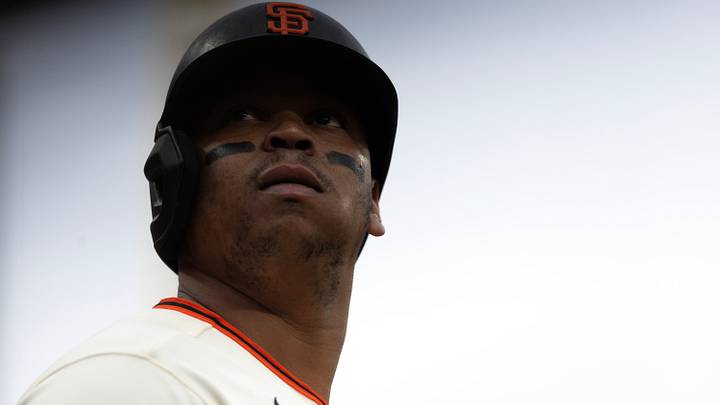
When NL MVP results were released last week, there were few surprises at the top of the ballot. Cubs center fielder Pete Crow-Armstrong won the award unanimously, and Shohei Ohtani received the bulk of second place votes. But finding out the winner is just part of the fun. Because each ballot includes 10 names, there are often more than 20 players who receive votes in each league. And one star was glaringly absent from this year's list of vote recipients: Giants slugger Rafael Devers.
Devers has never really contended for an MVP, but he has received plenty of down-ballot votes in the past, placing between 11th and 18th five times during his tenure in Boston. And this year, despite a rough start, he produced a typically excellent stat line, finishing with a career-best-tying 142 OPS+. So why the complete lack of love from voters this time around? There are a few reasons.
WAR is king
By some measures, Devers' snub was not egregious. Nobody would argue that he should have won the award, or even finished among the top five. Awards voting in recent years has begun to more closely mirror Wins Above Replacement, and Devers was well outside the top 10 in both the Baseball Reference and Fangraphs versions of the stat – he finished 26th among position players in the former and 28th in the latter. If you include pitchers, he falls to 36th and 41st, respectively.
Devers' relatively low WAR total was the product of both positional adjustments (which penalized him for being a first baseman/DH) and abysmal defensive metrics at first. He ranked 143rd in Defensive Runs Saved among all players who appeared in a game at the position, and by Statcast's Fielding Run Value he was 82nd out of 86 qualified first basemen.
Still, low WAR totals because of subpar defense don't typically preclude elite hitters from receivng down-ballot MVP consideration, and this year was no exception. That same FRV leaderboard has the White Sox' Munetaka Murakami ranked 71st, and he received a sixth-place vote in the AL despite missing time with an injury.
Even further down at 77th is the Reds' Sal Stewart, who received a seventh-place NL MVP vote and won the league's Rookie of the Year award. Former Brewers first baseman Jake Bauers, who got two tenth-place votes, is 78th on the list, and Phillies star Bryce Harper, who was dead last among first basemen with -10 DRS, was named on four different ballots and even got a fifth-place vote.
Each of these players finished with a lower OPS+ and WAR total than Devers, so clearly defense alone is not the whole story here. Which brings us to the next factor...
The Giants sucked
To state the obvious, Devers played on a terrible team. This can hurt players' MVP chances, though it may not always. But it is worth noting that three of the four aforementioned first baseman were on playoff teams, with Stewart the lone exception.
Narratively speaking, it is easy to link Devers' performance to the Giants' struggles in a way that cannot be done for Stewart. The Reds were clearly bad in spite of Stewart, not because of him – the rookie was a beacon of consistency, playing all 162 games and tallying an impressive 112 RBIs for a team that plated an NL-worst 666 runs (yes, that's fewer than the Giants scored).
Devers, meanwhile, limped out of the gate, slashing .207/.248/.289 through the end of April as San Francisco fell to 13-18. While he rebounded in a big way, his resurgence was marred by controversy and was not enough to turn the team's season around. Ending the year on the 60-day IL probably hurt his case, too.
The NL is better than ever
This is a less obvious factor, but it bears mentioning that the National League as a whole was arguably better than it has ever been relative to the American League. Neil Paine wrote in May about the NL's sudden dominance in interleague play, and that hot start held up as the senior circuit cruised to a .533 winning percentage in those games over the course of the season.
To summarize a mountain of research, the AL's historic dominance was largely a product of the DH rule and the Yankees' propensity to outspend everyone, which may have led other AL teams (particularly the mid-2000s Red Sox) to spend more on free agents in an effort to keep pace. Now that the DH has been in the NL for five years, and the Dodgers are the new Yankees, the pendulum has swung all the way back.
This effect manifested not just in interleague records but in the seasons produced by individuals. In 2026, there were 26 offensive players in the NL who finished with more than 3 WAR and an OPS+ of at least 120. That was the highest total for the league since 2002, and a stark contrast to the AL, where only 14 players met those marks. Considering almost everyone named on an MVP ballot exceeds at least one of these thresholds, it is easy to understand how Devers was lost in the shuffle.
Interesting though the reasons for Devers getting no MVP votes may be, the outcome itself is not particularly significant. I doubt that he, or many fans, would have felt any better about his season had he finished, say, 23rd. But the fact that we can argue he deserved consideration is a least a minor win, and a sign that he was good enough for long enough to provide serious optimism about how he'll produce in 2027.
 Add us as a preferred source on Google