%20%20--%3E%0A%3Csvg%20version%3D%221.1%22%20xmlns%3D%22http%3A%2F%2Fwww.w3.org%2F2000%2Fsvg%22%20xmlns%3Axlink%3D%22http%3A%2F%2Fwww.w3.org%2F1999%2Fxlink%22%20x%3D%220px%22%20y%3D%220px%22%0A%09%20viewBox%3D%220%200%20511.7%20200%22%20style%3D%22enable-background%3Anew%200%200%20511.7%20200%3B%22%20xml%3Aspace%3D%22preserve%22%3E%0A%3Cstyle%20type%3D%22text%2Fcss%22%3E%0A%09.st0%7Bfill%3A%23222222%3B%7D%0A%09.st1%7Bfill%3A%23F15C27%3B%7D%0A%09.st2%7Bfill%3A%23FFFFFF%3B%7D%0A%09.st3%7Bfill%3A%234D4D4D%3B%7D%0A%09.st4%7Bfill%3A%23777777%3B%7D%0A%3C%2Fstyle%3E%0A%3Cg%20id%3D%22Template%22%3E%0A%3C%2Fg%3E%0A%3Cg%20id%3D%22Layer_2%22%3E%0A%09%3Cg%3E%0A%09%09%3Cpath%20class%3D%22st1%22%20d%3D%22M21.7%2C0h28.9l21.7%2C90.5h-18l-5.1-21.9H23.1L18%2C90.5H0L21.7%2C0z%20M26.3%2C55.3h19.8l-9.9-41.3L26.3%2C55.3z%22%2F%3E%0A%09%09%3Cpath%20class%3D%22st1%22%20d%3D%22M78%2C90.5V0h42l17.8%2C13.6v30.1L123%2C55.7l15.4%2C34.7H119l-14.6-33.1h-6.8v33.1H78z%20M118.4%2C42V15.4H97.5V42H118.4%0A%09%09%09z%22%2F%3E%0A%09%09%3Cpath%20class%3D%22st1%22%20d%3D%22M190.2%2C90.5h-28.4l-17.7-12.8V12.8L161.8%2C0h28.4l17.7%2C12.8v64.8L190.2%2C90.5z%20M188.4%2C75.1V15.4h-24.8v59.7%0A%09%09%09H188.4z%22%2F%3E%0A%09%09%3Cpath%20class%3D%22st1%22%20d%3D%22M231.2%2C90.5l-17.7-12.8V0H233v75.1h23.9V0h19.5v77.6l-17.7%2C12.8H231.2z%22%2F%3E%0A%09%09%3Cpath%20class%3D%22st1%22%20d%3D%22M282%2C90.5V0h19.5l27.2%2C52.7V0h19.5v90.5h-19.5l-27.2-52.7v52.7H282z%22%2F%3E%0A%09%09%3Cpath%20class%3D%22st1%22%20d%3D%22M398.2%2C90.5h-44.4V0h44.4l17.7%2C13.6v63.1L398.2%2C90.5z%20M396.4%2C75.1V15.4h-23.1v59.7H396.4z%22%2F%3E%0A%09%3C%2Fg%3E%0A%09%3Cg%3E%0A%09%09%3Cpolygon%20class%3D%22st2%22%20points%3D%22490.2%2C100.2%20490.2%2C158.3%20460.2%2C100.2%20438.7%2C100.2%20438.7%2C200%20460.2%2C200%20460.2%2C141.9%20490.2%2C200%20%0A%09%09%09511.7%2C200%20511.7%2C100.2%20%09%09%22%2F%3E%0A%09%09%3Cpolygon%20class%3D%22st2%22%20points%3D%2257.5%2C117.2%2053.1%2C100.2%200%2C100.2%200%2C200%2021.5%2C200%2021.5%2C158.2%2042.5%2C158.2%2042.5%2C142%2021.5%2C142%2021.5%2C117.2%20%0A%09%09%09%09%09%22%2F%3E%0A%09%09%3Cpath%20class%3D%22st2%22%20d%3D%22M83.2%2C100.2l-19.5%2C14.2v71.5L83.2%2C200h31.3l19.5-14.2v-71.5l-19.5-14.2H83.2z%20M112.5%2C183H85.2v-65.8h27.3V183%0A%09%09%09z%22%2F%3E%0A%09%09%3Cpolygon%20class%3D%22st2%22%20points%3D%22184.8%2C183%20161.8%2C183%20161.8%2C117.2%20200.8%2C117.2%20196.4%2C100.2%20159.8%2C100.2%20140.3%2C115.2%20140.3%2C184.8%20%0A%09%09%09159.8%2C200%20186.6%2C200%20206.3%2C185.8%20206.3%2C150%20184.8%2C150%20%09%09%22%2F%3E%0A%09%09%3Cpolygon%20class%3D%22st2%22%20points%3D%22262.1%2C150%20234%2C150%20234%2C100.2%20212.5%2C100.2%20212.5%2C200%20234%2C200%20234%2C166.2%20262.1%2C166.2%20262.1%2C200%20%0A%09%09%09283.6%2C200%20283.6%2C100.2%20262.1%2C100.2%20%09%09%22%2F%3E%0A%09%09%3Cpath%20class%3D%22st2%22%20d%3D%22M309.4%2C100.2l-19.5%2C14.2v71.5l19.5%2C14.2h31.3l19.5-14.2v-71.5l-19.5-14.2H309.4z%20M338.7%2C183h-27.3v-65.8h27.3%0A%09%09%09V183z%22%2F%3E%0A%09%09%3Cpath%20class%3D%22st2%22%20d%3D%22M432.4%2C148.4v-33.2l-19.7-15h-46.3V200h21.5v-36.5h7.5l16.2%2C36.5h21.5l-17-38.3L432.4%2C148.4z%20M410.9%2C146.5%0A%09%09%09h-23v-29.3h23V146.5z%22%2F%3E%0A%09%3C%2Fg%3E%0A%09%3Cpolygon%20class%3D%22st3%22%20points%3D%22421.2%2C0%20421.2%2C44.2%20466.4%2C90.5%20511.7%2C44.2%20511.7%2C44.2%20511.7%2C0%20%09%22%2F%3E%0A%09%3Cpolygon%20class%3D%22st2%22%20points%3D%22442.4%2C48%20448.7%2C48%20448.7%2C23.6%20455%2C23.6%20453.7%2C18.6%20437.1%2C18.6%20435.9%2C23.6%20442.4%2C23.6%20%09%22%2F%3E%0A%09%3Cpolygon%20class%3D%22st2%22%20points%3D%22463.1%2C38%20471.4%2C38%20471.4%2C48%20477.7%2C48%20477.7%2C18.6%20471.4%2C18.6%20471.4%2C33.3%20463.1%2C33.3%20463.1%2C18.6%20%0A%09%09456.8%2C18.6%20456.8%2C48%20463.1%2C48%20%09%22%2F%3E%0A%09%3Cpolygon%20class%3D%22st2%22%20points%3D%22496.9%2C43%20486.2%2C43%20486.2%2C35.7%20492.6%2C35.7%20492.6%2C30.9%20486.2%2C30.9%20486.2%2C23.6%20497%2C23.6%20495.7%2C18.6%20%0A%09%09479.8%2C18.6%20479.8%2C48%20495.5%2C48%20%09%22%2F%3E%0A%3C%2Fg%3E%0A%3C%2Fsvg%3E%0A)

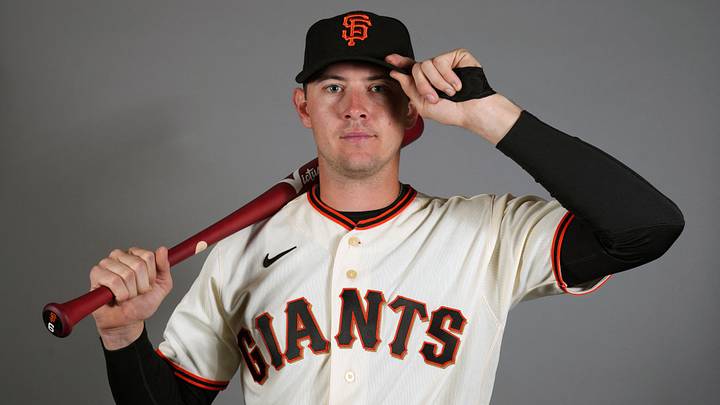
Going into the season, Patrick Bailey was an easy choice to be the team’s primary catcher. Coming off his second Gold Glove Award in a row and repeatedly praised for his framing ability and capable handling of the pitching staff, the Giants only needed him to hit about as much as Madison Bumgarner was able to. Sadly, even that level of production turned out to be too much to ask for.
Bailey’s spot in the lineup was an automatic out whenever he came up to the plate until he was traded to Cleveland on May 9th. A big reason the Giants scuffled so badly in April, Bailey’s .146/.213/.183 slash line (15 wRC+) was unplayable regardless of his defensive acumen. His backup, Rule 5 acquisition Daniel Susac, quickly overtook Bailey as the catcher of the future in the eyes of the organization and its fanbase.
Catcher of the future, or flash in the pan?
Susac’s start to the season was essentially the polar opposite of Bailey’s, which was especially important considering the Giants would have had to offer him back to the Athletics if he didn’t last the full year on the major league team. Susac became the first major leaguer to start his career 5-for-5 since Ted Cox all the way back in 1977, immediately asserting that he belonged. If Bailey’s at-bats were a perfect time to take a quick catnap or check your emails, Susac’s became instant must-see TV – a rarity for this team these days.
Susac, combined with Eric Haase and Jesus Rodriguez, seemingly provided the offensive ceiling of a skyscraper compared to Bailey. Thankfully Bailey hasn’t punished the Giants too much for trading him away yet, since he’s hit just .213/256/.325 in the Buckeye State – much improved from his start with the Giants, but still rough. Again, though, Susac has been on an opposite trajectory. His hot start to the season has soured in a way that has gone under the radar for most of us.
Through the end of May, Susac’s season line was a robust .293/.354/.397 (111 wRC+). He wasn’t hitting for power, but he certainly was doing a good job hitting for average, and a 111 wRC+ for a catcher is solidly above-average. From June 1st onward, however, he’s hit only .222/.250/.244 (38 wRC+), bringing his overall season line to .262/.310/.330 (80 wRC+) – and he’s still waiting for the first big-league homer of his career, too.
That 80 wRC+ would be serviceable if he could provide even a poor-man’s approximation of Bailey’s vaunted defense, but while his framing and pop-time ratings have been pretty positive, early returns on his handling of the pitching staff have been poor. Logan Webb has taken to calling his own games, which might be the direct cause of why he went from an uncharacteristically poor start to the season to the NL’s Pitcher of the Month in June. Webb previously told Evan Webeck of the California Post, “I didn’t throw the best until then. I just came back and [thought] I’ve done it before, I haven’t thrown to these guys a lot. I mean I was with [Patrick Bailey] for a long period of time. There’s a trust factor in those sorts of things.”
Manager Tony Vitello backed up Webb’s unease with Susac’s handling of the pitching staff. “I think at this point it would only be an excuse if you said there was lack of familiarity,” he remarked. “The youth, the inexperience just by itself [is] a lot. I really think it’s easier for the pitcher [to call his own pitches] when you’re talking about a young catcher…”
Webb hasn’t been the only one to start calling his own pitches, either. Robbie Ray has followed in his footsteps, and he’s all of a sudden much-improved in his own right. Landen Roupp has followed suit as well, as has Adrian Houser, although nothing’s been working well for him all year. Houser told the California Post that it’s been more difficult to get on the same page with the Giants’ catchers than any of the backstops he worked with last season, which would sound like a classic case of deflecting blame if it wasn’t for the anecdotal evidence that supported his claim.
Once Susac returns from the IL due to his lower back strain, he clearly has a way to go before he earns the trust of the pitching staff that he’s been tasked to lead, which isn’t an easy position for a rookie to be in. Hopefully his stint on the IL will be a bit of a mental reset for him as well as a physical one, as he balances trying to call better games with trying to get his stroke at the plate back.
As far as what we can expect of Susac going forward, just gaining more confidence at the plate and building more familiarity with the pitching staff is all we should be asking for in what’s a lost season for the team. A bat-first prospect during his time in the minors, he only just turned 25 in May, so there’s still time for him to improve behind the dish and get more comfortable there. Susac hasn’t lost his handle on the starting gig, but he’s not quite the savior he initially appeared to be, either.
 Add us as a preferred source on Google