%20%20--%3E%0A%3Csvg%20version%3D%221.1%22%20xmlns%3D%22http%3A%2F%2Fwww.w3.org%2F2000%2Fsvg%22%20xmlns%3Axlink%3D%22http%3A%2F%2Fwww.w3.org%2F1999%2Fxlink%22%20x%3D%220px%22%20y%3D%220px%22%0A%09%20viewBox%3D%220%200%20511.7%20200%22%20style%3D%22enable-background%3Anew%200%200%20511.7%20200%3B%22%20xml%3Aspace%3D%22preserve%22%3E%0A%3Cstyle%20type%3D%22text%2Fcss%22%3E%0A%09.st0%7Bfill%3A%23222222%3B%7D%0A%09.st1%7Bfill%3A%23F15C27%3B%7D%0A%09.st2%7Bfill%3A%23FFFFFF%3B%7D%0A%09.st3%7Bfill%3A%234D4D4D%3B%7D%0A%09.st4%7Bfill%3A%23777777%3B%7D%0A%3C%2Fstyle%3E%0A%3Cg%20id%3D%22Template%22%3E%0A%3C%2Fg%3E%0A%3Cg%20id%3D%22Layer_2%22%3E%0A%09%3Cg%3E%0A%09%09%3Cpath%20class%3D%22st1%22%20d%3D%22M21.7%2C0h28.9l21.7%2C90.5h-18l-5.1-21.9H23.1L18%2C90.5H0L21.7%2C0z%20M26.3%2C55.3h19.8l-9.9-41.3L26.3%2C55.3z%22%2F%3E%0A%09%09%3Cpath%20class%3D%22st1%22%20d%3D%22M78%2C90.5V0h42l17.8%2C13.6v30.1L123%2C55.7l15.4%2C34.7H119l-14.6-33.1h-6.8v33.1H78z%20M118.4%2C42V15.4H97.5V42H118.4%0A%09%09%09z%22%2F%3E%0A%09%09%3Cpath%20class%3D%22st1%22%20d%3D%22M190.2%2C90.5h-28.4l-17.7-12.8V12.8L161.8%2C0h28.4l17.7%2C12.8v64.8L190.2%2C90.5z%20M188.4%2C75.1V15.4h-24.8v59.7%0A%09%09%09H188.4z%22%2F%3E%0A%09%09%3Cpath%20class%3D%22st1%22%20d%3D%22M231.2%2C90.5l-17.7-12.8V0H233v75.1h23.9V0h19.5v77.6l-17.7%2C12.8H231.2z%22%2F%3E%0A%09%09%3Cpath%20class%3D%22st1%22%20d%3D%22M282%2C90.5V0h19.5l27.2%2C52.7V0h19.5v90.5h-19.5l-27.2-52.7v52.7H282z%22%2F%3E%0A%09%09%3Cpath%20class%3D%22st1%22%20d%3D%22M398.2%2C90.5h-44.4V0h44.4l17.7%2C13.6v63.1L398.2%2C90.5z%20M396.4%2C75.1V15.4h-23.1v59.7H396.4z%22%2F%3E%0A%09%3C%2Fg%3E%0A%09%3Cg%3E%0A%09%09%3Cpolygon%20class%3D%22st2%22%20points%3D%22490.2%2C100.2%20490.2%2C158.3%20460.2%2C100.2%20438.7%2C100.2%20438.7%2C200%20460.2%2C200%20460.2%2C141.9%20490.2%2C200%20%0A%09%09%09511.7%2C200%20511.7%2C100.2%20%09%09%22%2F%3E%0A%09%09%3Cpolygon%20class%3D%22st2%22%20points%3D%2257.5%2C117.2%2053.1%2C100.2%200%2C100.2%200%2C200%2021.5%2C200%2021.5%2C158.2%2042.5%2C158.2%2042.5%2C142%2021.5%2C142%2021.5%2C117.2%20%0A%09%09%09%09%09%22%2F%3E%0A%09%09%3Cpath%20class%3D%22st2%22%20d%3D%22M83.2%2C100.2l-19.5%2C14.2v71.5L83.2%2C200h31.3l19.5-14.2v-71.5l-19.5-14.2H83.2z%20M112.5%2C183H85.2v-65.8h27.3V183%0A%09%09%09z%22%2F%3E%0A%09%09%3Cpolygon%20class%3D%22st2%22%20points%3D%22184.8%2C183%20161.8%2C183%20161.8%2C117.2%20200.8%2C117.2%20196.4%2C100.2%20159.8%2C100.2%20140.3%2C115.2%20140.3%2C184.8%20%0A%09%09%09159.8%2C200%20186.6%2C200%20206.3%2C185.8%20206.3%2C150%20184.8%2C150%20%09%09%22%2F%3E%0A%09%09%3Cpolygon%20class%3D%22st2%22%20points%3D%22262.1%2C150%20234%2C150%20234%2C100.2%20212.5%2C100.2%20212.5%2C200%20234%2C200%20234%2C166.2%20262.1%2C166.2%20262.1%2C200%20%0A%09%09%09283.6%2C200%20283.6%2C100.2%20262.1%2C100.2%20%09%09%22%2F%3E%0A%09%09%3Cpath%20class%3D%22st2%22%20d%3D%22M309.4%2C100.2l-19.5%2C14.2v71.5l19.5%2C14.2h31.3l19.5-14.2v-71.5l-19.5-14.2H309.4z%20M338.7%2C183h-27.3v-65.8h27.3%0A%09%09%09V183z%22%2F%3E%0A%09%09%3Cpath%20class%3D%22st2%22%20d%3D%22M432.4%2C148.4v-33.2l-19.7-15h-46.3V200h21.5v-36.5h7.5l16.2%2C36.5h21.5l-17-38.3L432.4%2C148.4z%20M410.9%2C146.5%0A%09%09%09h-23v-29.3h23V146.5z%22%2F%3E%0A%09%3C%2Fg%3E%0A%09%3Cpolygon%20class%3D%22st3%22%20points%3D%22421.2%2C0%20421.2%2C44.2%20466.4%2C90.5%20511.7%2C44.2%20511.7%2C44.2%20511.7%2C0%20%09%22%2F%3E%0A%09%3Cpolygon%20class%3D%22st2%22%20points%3D%22442.4%2C48%20448.7%2C48%20448.7%2C23.6%20455%2C23.6%20453.7%2C18.6%20437.1%2C18.6%20435.9%2C23.6%20442.4%2C23.6%20%09%22%2F%3E%0A%09%3Cpolygon%20class%3D%22st2%22%20points%3D%22463.1%2C38%20471.4%2C38%20471.4%2C48%20477.7%2C48%20477.7%2C18.6%20471.4%2C18.6%20471.4%2C33.3%20463.1%2C33.3%20463.1%2C18.6%20%0A%09%09456.8%2C18.6%20456.8%2C48%20463.1%2C48%20%09%22%2F%3E%0A%09%3Cpolygon%20class%3D%22st2%22%20points%3D%22496.9%2C43%20486.2%2C43%20486.2%2C35.7%20492.6%2C35.7%20492.6%2C30.9%20486.2%2C30.9%20486.2%2C23.6%20497%2C23.6%20495.7%2C18.6%20%0A%09%09479.8%2C18.6%20479.8%2C48%20495.5%2C48%20%09%22%2F%3E%0A%3C%2Fg%3E%0A%3C%2Fsvg%3E%0A)

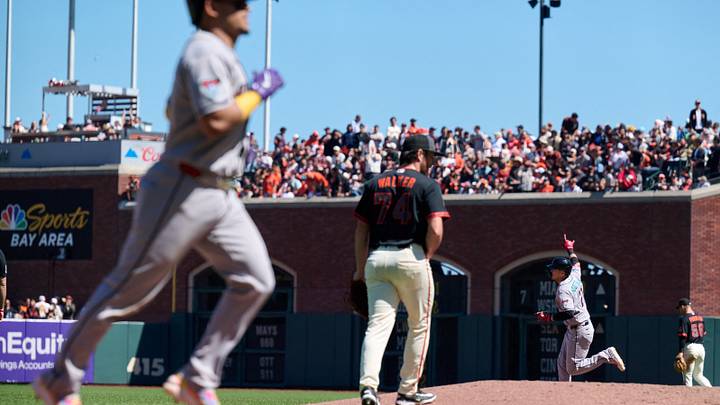
On Sunday, the SF Giants shipped veteran hurler Ryan Walker to the Milwaukee Brewers in exchange for a pair of pitching prospects. The move came after the Giants exhausted him as a reliable option and they simply ran out of time.
Walker was due for a raise in his first trip through arbitration. According to MLB Trade Rumors, he is projected to earn $1.6 million in 2027. The actual amount may vary, but these projections tend to be reliable.
Once a player hits arbitration, it forces a decision. Does the team keep him and pay him a raise for the following season or do they part ways by declining to tender him a contract?
With Walker, he is coming off a year in which he posted a 7.16 ERA, 5.52 FIP, 1.80 WHIP, 6.3 K/9, and a 1.21 SO/W rate across 32.2 innings. The Giants hoped that he could rebound from a down 2025 campaign, but that was a bet they should not have made.
Walker’s struggles mirrored the struggles of the bullpen. He displayed declining strikeout and walk rates over the past couple of seasons in a bullpen that was doing too much of the same.
The SF Giants simply ran out of time and opportunities with Ryan Walker
For a bullpen that walks too many and walks not enough, bringing back Walker not help in improving those areas.
The right-handed reliever was one of the more valuable bullpens arms in baseball in 2024. He had several chances to regain that form, but was unable to after two straight down seasons. Teams do not often commit to arbitration-eligible players who do not have a role. For Walker, he had no discernible role with the Giants, except as a depth arm.
With the non-tender deadline looming, they likely would have cut ties with Walker. Instead, he gets traded to the Brewers, which is often one of the best landing spots for a struggling reliever.
The Brewers may get better results out of Walker. They do that way more often with pitchers than the Giants do, so it would not be surprising. It would be hard to envision the Giants keeping him and finding a way to get him back to his 2024. They just do not have that track record.
A couple of years down the road, this might look like a regrettable trade for the Giants in hindsight. However, there is no hindsight analysis here. The Giants gave Walker plenty of chances, and arguably too many, but they simply ran out of time.
There is no downside and no risk with this trade. They acquired a couple of prospects for a player they were likely going to non-tender in a couple of days anyway.
If the Brewers get better results from Walker, it might broach a fair question about why the Giants’ pitching infrastructure is lacking in this area. However, that would not be a new observation, but merely a continuation of a trend.
 Add us as a preferred source on Google