%20%20--%3E%0A%3Csvg%20version%3D%221.1%22%20xmlns%3D%22http%3A%2F%2Fwww.w3.org%2F2000%2Fsvg%22%20xmlns%3Axlink%3D%22http%3A%2F%2Fwww.w3.org%2F1999%2Fxlink%22%20x%3D%220px%22%20y%3D%220px%22%0A%09%20viewBox%3D%220%200%20511.7%20200%22%20style%3D%22enable-background%3Anew%200%200%20511.7%20200%3B%22%20xml%3Aspace%3D%22preserve%22%3E%0A%3Cstyle%20type%3D%22text%2Fcss%22%3E%0A%09.st0%7Bfill%3A%23222222%3B%7D%0A%09.st1%7Bfill%3A%23F15C27%3B%7D%0A%09.st2%7Bfill%3A%23FFFFFF%3B%7D%0A%09.st3%7Bfill%3A%234D4D4D%3B%7D%0A%09.st4%7Bfill%3A%23777777%3B%7D%0A%3C%2Fstyle%3E%0A%3Cg%20id%3D%22Template%22%3E%0A%3C%2Fg%3E%0A%3Cg%20id%3D%22Layer_2%22%3E%0A%09%3Cg%3E%0A%09%09%3Cpath%20class%3D%22st1%22%20d%3D%22M21.7%2C0h28.9l21.7%2C90.5h-18l-5.1-21.9H23.1L18%2C90.5H0L21.7%2C0z%20M26.3%2C55.3h19.8l-9.9-41.3L26.3%2C55.3z%22%2F%3E%0A%09%09%3Cpath%20class%3D%22st1%22%20d%3D%22M78%2C90.5V0h42l17.8%2C13.6v30.1L123%2C55.7l15.4%2C34.7H119l-14.6-33.1h-6.8v33.1H78z%20M118.4%2C42V15.4H97.5V42H118.4%0A%09%09%09z%22%2F%3E%0A%09%09%3Cpath%20class%3D%22st1%22%20d%3D%22M190.2%2C90.5h-28.4l-17.7-12.8V12.8L161.8%2C0h28.4l17.7%2C12.8v64.8L190.2%2C90.5z%20M188.4%2C75.1V15.4h-24.8v59.7%0A%09%09%09H188.4z%22%2F%3E%0A%09%09%3Cpath%20class%3D%22st1%22%20d%3D%22M231.2%2C90.5l-17.7-12.8V0H233v75.1h23.9V0h19.5v77.6l-17.7%2C12.8H231.2z%22%2F%3E%0A%09%09%3Cpath%20class%3D%22st1%22%20d%3D%22M282%2C90.5V0h19.5l27.2%2C52.7V0h19.5v90.5h-19.5l-27.2-52.7v52.7H282z%22%2F%3E%0A%09%09%3Cpath%20class%3D%22st1%22%20d%3D%22M398.2%2C90.5h-44.4V0h44.4l17.7%2C13.6v63.1L398.2%2C90.5z%20M396.4%2C75.1V15.4h-23.1v59.7H396.4z%22%2F%3E%0A%09%3C%2Fg%3E%0A%09%3Cg%3E%0A%09%09%3Cpolygon%20class%3D%22st2%22%20points%3D%22490.2%2C100.2%20490.2%2C158.3%20460.2%2C100.2%20438.7%2C100.2%20438.7%2C200%20460.2%2C200%20460.2%2C141.9%20490.2%2C200%20%0A%09%09%09511.7%2C200%20511.7%2C100.2%20%09%09%22%2F%3E%0A%09%09%3Cpolygon%20class%3D%22st2%22%20points%3D%2257.5%2C117.2%2053.1%2C100.2%200%2C100.2%200%2C200%2021.5%2C200%2021.5%2C158.2%2042.5%2C158.2%2042.5%2C142%2021.5%2C142%2021.5%2C117.2%20%0A%09%09%09%09%09%22%2F%3E%0A%09%09%3Cpath%20class%3D%22st2%22%20d%3D%22M83.2%2C100.2l-19.5%2C14.2v71.5L83.2%2C200h31.3l19.5-14.2v-71.5l-19.5-14.2H83.2z%20M112.5%2C183H85.2v-65.8h27.3V183%0A%09%09%09z%22%2F%3E%0A%09%09%3Cpolygon%20class%3D%22st2%22%20points%3D%22184.8%2C183%20161.8%2C183%20161.8%2C117.2%20200.8%2C117.2%20196.4%2C100.2%20159.8%2C100.2%20140.3%2C115.2%20140.3%2C184.8%20%0A%09%09%09159.8%2C200%20186.6%2C200%20206.3%2C185.8%20206.3%2C150%20184.8%2C150%20%09%09%22%2F%3E%0A%09%09%3Cpolygon%20class%3D%22st2%22%20points%3D%22262.1%2C150%20234%2C150%20234%2C100.2%20212.5%2C100.2%20212.5%2C200%20234%2C200%20234%2C166.2%20262.1%2C166.2%20262.1%2C200%20%0A%09%09%09283.6%2C200%20283.6%2C100.2%20262.1%2C100.2%20%09%09%22%2F%3E%0A%09%09%3Cpath%20class%3D%22st2%22%20d%3D%22M309.4%2C100.2l-19.5%2C14.2v71.5l19.5%2C14.2h31.3l19.5-14.2v-71.5l-19.5-14.2H309.4z%20M338.7%2C183h-27.3v-65.8h27.3%0A%09%09%09V183z%22%2F%3E%0A%09%09%3Cpath%20class%3D%22st2%22%20d%3D%22M432.4%2C148.4v-33.2l-19.7-15h-46.3V200h21.5v-36.5h7.5l16.2%2C36.5h21.5l-17-38.3L432.4%2C148.4z%20M410.9%2C146.5%0A%09%09%09h-23v-29.3h23V146.5z%22%2F%3E%0A%09%3C%2Fg%3E%0A%09%3Cpolygon%20class%3D%22st3%22%20points%3D%22421.2%2C0%20421.2%2C44.2%20466.4%2C90.5%20511.7%2C44.2%20511.7%2C44.2%20511.7%2C0%20%09%22%2F%3E%0A%09%3Cpolygon%20class%3D%22st2%22%20points%3D%22442.4%2C48%20448.7%2C48%20448.7%2C23.6%20455%2C23.6%20453.7%2C18.6%20437.1%2C18.6%20435.9%2C23.6%20442.4%2C23.6%20%09%22%2F%3E%0A%09%3Cpolygon%20class%3D%22st2%22%20points%3D%22463.1%2C38%20471.4%2C38%20471.4%2C48%20477.7%2C48%20477.7%2C18.6%20471.4%2C18.6%20471.4%2C33.3%20463.1%2C33.3%20463.1%2C18.6%20%0A%09%09456.8%2C18.6%20456.8%2C48%20463.1%2C48%20%09%22%2F%3E%0A%09%3Cpolygon%20class%3D%22st2%22%20points%3D%22496.9%2C43%20486.2%2C43%20486.2%2C35.7%20492.6%2C35.7%20492.6%2C30.9%20486.2%2C30.9%20486.2%2C23.6%20497%2C23.6%20495.7%2C18.6%20%0A%09%09479.8%2C18.6%20479.8%2C48%20495.5%2C48%20%09%22%2F%3E%0A%3C%2Fg%3E%0A%3C%2Fsvg%3E%0A)

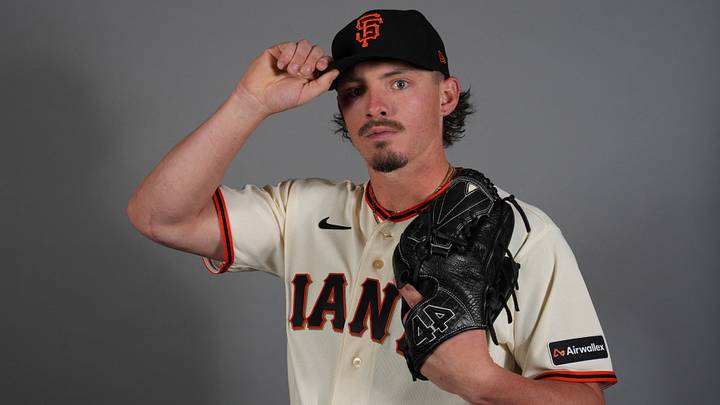
Almost all young major-league pitchers go through a rough patch during the early years of their careers. It's almost part of the development process. The SF Giants have and will have a lot of young arms coming up, so those tough stretches are to be expected. Blade Tidwell, who allowed two runs in five innings in his first big-league start with the Giants, gave up eight runs across his first two MLB starts with the Mets last year. Carson Whisenhunt is in the middle of a big rough patch right now.
Since replacing Trevor McDonald in the rotation in late July, the former second-round pick has posted a 10.80 ERA over his three starts and 11 2/3 innings pitched. Opposing hitters are batting .347 with a 1.094 OPS against him during that stretch. He's walked nine batters and allowed three home runs.
That's the definition of a rough stretch. But that doesn't mean the Giants are going to option him back. He'll receive more opportunities before the season ends, as he should. He'll get a reasonable runway to work on his stuff, like developing a reliable third pitch to go with his fastball and changeup, and, in the long run, maybe even mixing in a curveball to be able to change speeds and make his best pitch, the changeup, even more effective. His changeup is already an MLB-caliber offering. Opposing batters are hitting just .190 against the pitch. It has generated a 43.7% whiff rate, and 12 of his 20 total strikeouts this season have come off of it.
The Giants will evaluate as many players as possible over the next two months. The rotation already lost two veterans with the departures of Tyler Mahle and Robbie Ray at the deadline and could get even thinner as the season goes on. The team could start managing Logan Webb's and Landen Roupp's workloads. Roupp has already set a new career high in innings at 118 1/3. Both are expected to pitch this weekend against the Detroit Tigers.
SF Giants prospect Trent Harris is making noise in Triple-A
Innings are going to have to be played, and one former undrafted two-way player has quietly been making his case for earning some of those. Trent Harris, who used to play some third base in college, has been excellent throughout June and July, posting a 1.09 ERA over 24 2/3 innings. His last three appearances on the mound have been starts, the first three of his professional career. And he's yet to give up a run in a starting role, throwing 10 scoreless innings across those three starts, allowing just four hits, issuing just one walk, and striking out 17 batters in the process. Harris got rewarded for his performances on the mound by being named the Pacific Coast League Pitcher of the Week for July 20-26.
Trent, son of former big-leaguer Greg Harris, revealed in an interview with Bill Laskey that starting the game has helped him rediscover the warm-up routine he used during his college career at High Point University and UNC Pembroke.
Not only is Harris used to both coming out of the bullpen and now starting on the mound, but he also has the arsenal to shine in both roles. During his longest outing of the season against the Oklahoma City Comets a couple of weeks ago, when he tossed four scoreless innings and struck out eight, Harris used five different pitches. He threw a season-high 51 pitches over those four innings: 14 cutters, 13 curveballs, 12 sinkers, 11 sliders, and one splitter. His five-pitch repertoire offers the Giants several ways to use him. The variety of his arsenal allows him to face a lineup multiple times and cover multiple innings, even six frames or longer if the Giants continue to stretch him out. And his curveball has the potential to become a lethal strikeout pitch in short relief appearances, as the pitch has produced a 42.5% whiff rate, a .159 expected batting average, and a .185 expected slugging percentage.
Harris had been scheduled to start for the River Cats on August 5, but Joe Whitman ended up starting on the mound for Sacramento that day. With the Giants opening a series against Detroit on Friday, it could mean that a call-up is on the way. He's not on the 40-man roster, so San Francisco would need to create a spot for him.
I envision three different routes the Giants could take with him over the remainder of the season once he reaches the big leagues. It's still unclear how the organization plans on using him.
Harris would give the Giants a lot of flexibility
Option number one: use him as a regular reliever. Harris has shown during his time in Triple-A that he can be a reliable reliever. In fact, he'd only known that role before a few weeks ago, and this bullpen needs a complete overhaul, so why not give it a try?
Option number two: use him as a one-inning opener for Adrian Houser or someone else. Three major flaws have emerged from Houser's game this season. He's struggled to begin games effectively, posting a 9.64 first-inning ERA. He's had a rough time when facing hitters for a third time, posting a 9.75 ERA his third time through the lineup. And left-handed hitters have batted .339 with a 1.042 OPS against him.
After the first inning and during his first and second times through the order, Houser has looked just fine. He's posted a 2.77 ERA in the second inning and a 1.38 ERA in the third. His ERA against the first nine batters he faces is at 4.37, and against the second nine, it plummets to 2.60. Therefore, using an opener — especially Harris who's been effective against lefties — would help alleviate those deficiencies. Harris would face the most dangerous lefties at the top of the order, which would allow Houser to enter against the middle or bottom of the order and reduce the possibility of Houser facing hitters three times.
Option number three: use Harris as a multi-inning opener/reliever. The benefits would basically be the same. Houser could face the lineup just twice and come in against the middle of the order. But it would give Harris a more substantial major-league audition and allow the Giants to evaluate him on a deeper level to see whether or not they want to turn him into a rotation arm.
The exciting part about Harris — aside from the impressive numbers he's put up — is his versatility, which gives the Giants a lot of flexibility. They could use him as an opener, a multi-inning reliever, a regular reliever, and even a starter if they see the potential.
Once again, those two months of baseball will serve as an overall evaluation of this roster to see who has the potential to make an impact as soon as next year. Tidwell, Whisenhunt, and Harris are three legitimate candidates. And others could still emerge.
Editor's note: Harris was officially called up by the Giants after this article was published. Tristan Beck was sent to Triple-A.
 Add us as a preferred source on Google