%20%20--%3E%0A%3Csvg%20version%3D%221.1%22%20xmlns%3D%22http%3A%2F%2Fwww.w3.org%2F2000%2Fsvg%22%20xmlns%3Axlink%3D%22http%3A%2F%2Fwww.w3.org%2F1999%2Fxlink%22%20x%3D%220px%22%20y%3D%220px%22%0A%09%20viewBox%3D%220%200%20511.7%20200%22%20style%3D%22enable-background%3Anew%200%200%20511.7%20200%3B%22%20xml%3Aspace%3D%22preserve%22%3E%0A%3Cstyle%20type%3D%22text%2Fcss%22%3E%0A%09.st0%7Bfill%3A%23222222%3B%7D%0A%09.st1%7Bfill%3A%23F15C27%3B%7D%0A%09.st2%7Bfill%3A%23FFFFFF%3B%7D%0A%09.st3%7Bfill%3A%234D4D4D%3B%7D%0A%09.st4%7Bfill%3A%23777777%3B%7D%0A%3C%2Fstyle%3E%0A%3Cg%20id%3D%22Template%22%3E%0A%3C%2Fg%3E%0A%3Cg%20id%3D%22Layer_2%22%3E%0A%09%3Cg%3E%0A%09%09%3Cpath%20class%3D%22st1%22%20d%3D%22M21.7%2C0h28.9l21.7%2C90.5h-18l-5.1-21.9H23.1L18%2C90.5H0L21.7%2C0z%20M26.3%2C55.3h19.8l-9.9-41.3L26.3%2C55.3z%22%2F%3E%0A%09%09%3Cpath%20class%3D%22st1%22%20d%3D%22M78%2C90.5V0h42l17.8%2C13.6v30.1L123%2C55.7l15.4%2C34.7H119l-14.6-33.1h-6.8v33.1H78z%20M118.4%2C42V15.4H97.5V42H118.4%0A%09%09%09z%22%2F%3E%0A%09%09%3Cpath%20class%3D%22st1%22%20d%3D%22M190.2%2C90.5h-28.4l-17.7-12.8V12.8L161.8%2C0h28.4l17.7%2C12.8v64.8L190.2%2C90.5z%20M188.4%2C75.1V15.4h-24.8v59.7%0A%09%09%09H188.4z%22%2F%3E%0A%09%09%3Cpath%20class%3D%22st1%22%20d%3D%22M231.2%2C90.5l-17.7-12.8V0H233v75.1h23.9V0h19.5v77.6l-17.7%2C12.8H231.2z%22%2F%3E%0A%09%09%3Cpath%20class%3D%22st1%22%20d%3D%22M282%2C90.5V0h19.5l27.2%2C52.7V0h19.5v90.5h-19.5l-27.2-52.7v52.7H282z%22%2F%3E%0A%09%09%3Cpath%20class%3D%22st1%22%20d%3D%22M398.2%2C90.5h-44.4V0h44.4l17.7%2C13.6v63.1L398.2%2C90.5z%20M396.4%2C75.1V15.4h-23.1v59.7H396.4z%22%2F%3E%0A%09%3C%2Fg%3E%0A%09%3Cg%3E%0A%09%09%3Cpolygon%20class%3D%22st2%22%20points%3D%22490.2%2C100.2%20490.2%2C158.3%20460.2%2C100.2%20438.7%2C100.2%20438.7%2C200%20460.2%2C200%20460.2%2C141.9%20490.2%2C200%20%0A%09%09%09511.7%2C200%20511.7%2C100.2%20%09%09%22%2F%3E%0A%09%09%3Cpolygon%20class%3D%22st2%22%20points%3D%2257.5%2C117.2%2053.1%2C100.2%200%2C100.2%200%2C200%2021.5%2C200%2021.5%2C158.2%2042.5%2C158.2%2042.5%2C142%2021.5%2C142%2021.5%2C117.2%20%0A%09%09%09%09%09%22%2F%3E%0A%09%09%3Cpath%20class%3D%22st2%22%20d%3D%22M83.2%2C100.2l-19.5%2C14.2v71.5L83.2%2C200h31.3l19.5-14.2v-71.5l-19.5-14.2H83.2z%20M112.5%2C183H85.2v-65.8h27.3V183%0A%09%09%09z%22%2F%3E%0A%09%09%3Cpolygon%20class%3D%22st2%22%20points%3D%22184.8%2C183%20161.8%2C183%20161.8%2C117.2%20200.8%2C117.2%20196.4%2C100.2%20159.8%2C100.2%20140.3%2C115.2%20140.3%2C184.8%20%0A%09%09%09159.8%2C200%20186.6%2C200%20206.3%2C185.8%20206.3%2C150%20184.8%2C150%20%09%09%22%2F%3E%0A%09%09%3Cpolygon%20class%3D%22st2%22%20points%3D%22262.1%2C150%20234%2C150%20234%2C100.2%20212.5%2C100.2%20212.5%2C200%20234%2C200%20234%2C166.2%20262.1%2C166.2%20262.1%2C200%20%0A%09%09%09283.6%2C200%20283.6%2C100.2%20262.1%2C100.2%20%09%09%22%2F%3E%0A%09%09%3Cpath%20class%3D%22st2%22%20d%3D%22M309.4%2C100.2l-19.5%2C14.2v71.5l19.5%2C14.2h31.3l19.5-14.2v-71.5l-19.5-14.2H309.4z%20M338.7%2C183h-27.3v-65.8h27.3%0A%09%09%09V183z%22%2F%3E%0A%09%09%3Cpath%20class%3D%22st2%22%20d%3D%22M432.4%2C148.4v-33.2l-19.7-15h-46.3V200h21.5v-36.5h7.5l16.2%2C36.5h21.5l-17-38.3L432.4%2C148.4z%20M410.9%2C146.5%0A%09%09%09h-23v-29.3h23V146.5z%22%2F%3E%0A%09%3C%2Fg%3E%0A%09%3Cpolygon%20class%3D%22st3%22%20points%3D%22421.2%2C0%20421.2%2C44.2%20466.4%2C90.5%20511.7%2C44.2%20511.7%2C44.2%20511.7%2C0%20%09%22%2F%3E%0A%09%3Cpolygon%20class%3D%22st2%22%20points%3D%22442.4%2C48%20448.7%2C48%20448.7%2C23.6%20455%2C23.6%20453.7%2C18.6%20437.1%2C18.6%20435.9%2C23.6%20442.4%2C23.6%20%09%22%2F%3E%0A%09%3Cpolygon%20class%3D%22st2%22%20points%3D%22463.1%2C38%20471.4%2C38%20471.4%2C48%20477.7%2C48%20477.7%2C18.6%20471.4%2C18.6%20471.4%2C33.3%20463.1%2C33.3%20463.1%2C18.6%20%0A%09%09456.8%2C18.6%20456.8%2C48%20463.1%2C48%20%09%22%2F%3E%0A%09%3Cpolygon%20class%3D%22st2%22%20points%3D%22496.9%2C43%20486.2%2C43%20486.2%2C35.7%20492.6%2C35.7%20492.6%2C30.9%20486.2%2C30.9%20486.2%2C23.6%20497%2C23.6%20495.7%2C18.6%20%0A%09%09479.8%2C18.6%20479.8%2C48%20495.5%2C48%20%09%22%2F%3E%0A%3C%2Fg%3E%0A%3C%2Fsvg%3E%0A)

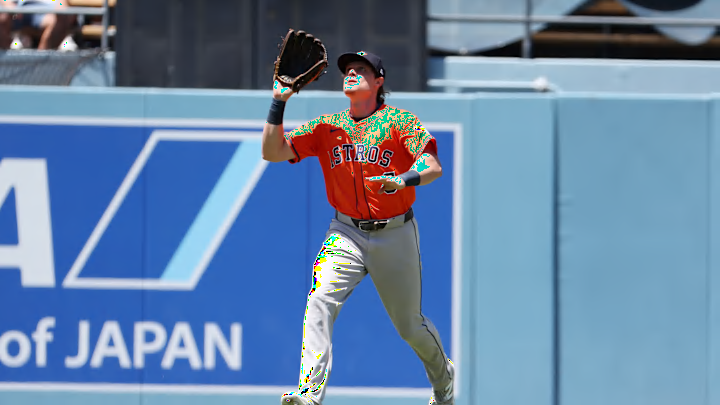
The Tatsuya Imai signing could force the Houston Astros to look at other areas of the roster to shed payroll. If so, the SF Giants could bolster the outfielder defense by trade for Astros outfielder Jake Meyers.
One Astros trade candidate the SF Giants should target to bolster outfield defense
The Astros signed Imai to a three-year, $63 million deal. This contract includes opt-outs after the first two seasons, and that dollar figure factors in reasonably attainable escalators and performance bonuses. The guaranteed portion of his contract is for $54 million.
Fangraphs estimates that the Astros have committed $237.7 million against the Competitive Balance Tax (CBT) for 2026. The CBT threshold is $244 million, so they do not have much breathing room below that amount to make further additions.
That estimate is based on the projected salaries for their 11 arbitration-eligible players on the roster. If a player earns above that estimate, then it will reduce the cushion they have below the CBT threshold.
Teams often like to have breathing room below that threshold to make mid-season additions. However, this does not give them much wiggle room, if they aim to stay below that threshold. That is seemingly the goal for Houston, and they have already set a precedent for it this offseason.
In November, the Astros shipped versatile infielder Mauricio Dubón to the Atlanta Braves in exchange for Nick Allen. They are both strong defensively, but Dubón moves around the field more, whereas Allen typically stays at shorstop. Allen offers very little offensive upside, whereas Dubón has proven to be a reliable hitter.
Dubón was projected to see $5.8 million in arbitration, and eventually agreed to a $6.1 million salary for 2026 with Atlanta. On the other hand, Allen is projected to see $1.5 million. On the surface, this looks like a clear cost-cutting move, as Dubón had carved out a nice role as a utility bat for the Astros at an affordable rate.
If this is a precedent for how the Astros plan to operate, then it could lead to more moves like this. Of course, they would like to move Christian Walker and the remainder of his three-year, $60 million deal. However, he is coming off a down year, so that type of move seems unlikely unless the Astros add in a prospect to incentivize another team to take on salary.
It could lead to smaller moves like Bryan Abreu, Jesús Sánchez, and Jake Meyers. None of them are projected to earn a relatively high salary in 2026, but moving them would be similar to the Dubón trade. This is a long-winded way of building a case for Meyers and the Giants.
Meyers is projected to earn $3.5 million in arbitration for 2026. That is not a huge amount, but it would give the Astros more breathing room below the luxury tax.
The 29-year-old outfielder's profile leans more in favor of his glove than is bat. In 2025, he slashed .292/.354/.373 (107 wRC+) with three home runs, 24 RBI, and 53 runs in 381 plate appearances. He also swiped 16 bases in 21 chances. On the Giants, he would have comfortably led the team in that category.
Meyers is a competent hitter, but provides much of his value in the outfield. He tallied five Defensive Runs Saved (DRS), nine Outs Above Average (OAA), and eight Fielding Run Value (FRV) in center field in 2025. Regardless of the metric you use, he was a comfortably above-average glove in the outfield. Since he debuted in 2021, he leads all center fielders with 41 OAA.
On the other hand, the Giants were last in that category in 2025 with -18 OAA. They have stated their desire to improve outfield defense, but if they are returning Heliot Ramos and and Jung Hoo Lee, it is hard to make that case.
They could rework the defensive alignment if they added a glove-first outfielder like Meyers. The addition of Meyers would push Lee to right field, which may be his better long-term position anyway. They would still have a below-average glove in left field with Ramos, but this defensive alignment likely moves them from being the worst unit in baseball to something closer to the middle of the pack. That would be a huge improvement.
At worst, Meyers is a glove-first fourth outfielder with respectable numbers against left-handed pitching. That is an area where the Giants struggled badly last year. They have not done anything to upgrade that issue yet. Meyers can help the Giants in more ways than one.
The Astros could be motivated to shed payroll around the margins. If so, the Giants line up as a trade partner in a deal that could prove to be mutually beneficial.
 Add us as a preferred source on Google